How our engineers work with AI
Sentinel
Anyone can rent an AI coding agent. Sentinel is the system we built so that ours never act on their own. It’s where they ask before they decide, remember what they’ve been corrected on, and prove their work before it reaches yours.
What it means on your engagement
An answer when someone asks who decided.
Every decision an agent needs goes to your named engineer with the options and a recommendation, and the answer is on record. When your regulator, auditor or acquirer asks, you can show them.
You don’t pay for the same mistake twice.
Correct an agent once and, when your engineer accepts it, the correction becomes a rule every later session follows, in every part of your codebase.
Changes that arrive with their proof.
Every check has been seen to fail on purpose, so each pull request comes with evidence it works. Your team reviews faster, and nothing reaches your code on trust.
Why we built it
The agents are a commodity. Accountability isn’t.
Claude Code costs us exactly what it costs you, from $20 a month, and it’s brilliant. It also forgets everything between sessions, asks its questions halfway down a transcript nobody is reading, and leaves things running when it’s done.
We tried fixing that the obvious way, by telling the agents to keep notes. Across nine sessions they made 87 commits and logged 29 of them, and ran the tests 1,207 times and reported 74 of the results. So we stopped asking nicely and built a mechanism instead.
In most software, a forgetful agent is an annoyance. In a credit decision, a payment flow or a patient record, it ends with someone asking who approved the change. Sentinel means we always have the answer.
Four questions
Ask them of anyone who puts AI agents in your codebase. Including us.
Sooner or later your regulator, your auditor or your acquirer will ask them. Here’s how Sentinel lets us answer, for every change we make.
01 · Ask
Who decided this?
When an agent needs a decision, it posts it to your engineer with the context, the options, the one it recommends and why. Anything less is refused. The engineer answers in a click, and the answer, and what came of it, is recorded.
The agent proposes. A person decides.
02 · Check
What did it know before it changed the file?
For each repository we write down how it’s built: its parts, the commands that check them, and the rules for which files. Before an edit, the agent is told the rules and checks for that file, what else the change reaches, and whether another agent is working there.
Checked before the edit, not found in review.
03 · Prove
How do you know the tests work?
Every automated check gets a deliberate defect written for it. Each defect is applied in a throwaway copy, and the check has to go red. A check that stays green when the code is broken is decoration, not evidence.
A check you haven’t seen fail proves nothing.
04 · Learn
Will it make the same mistake twice?
When your engineer corrects an agent (“never round before the ledger posts”), the correction is recorded with its evidence as a proposal. Only a person can accept it. Once accepted, it’s put in front of every later session automatically, whether or not the agent thinks to look.
Corrections become rules only when a person says so.
What it looks like
What runs behind the work.
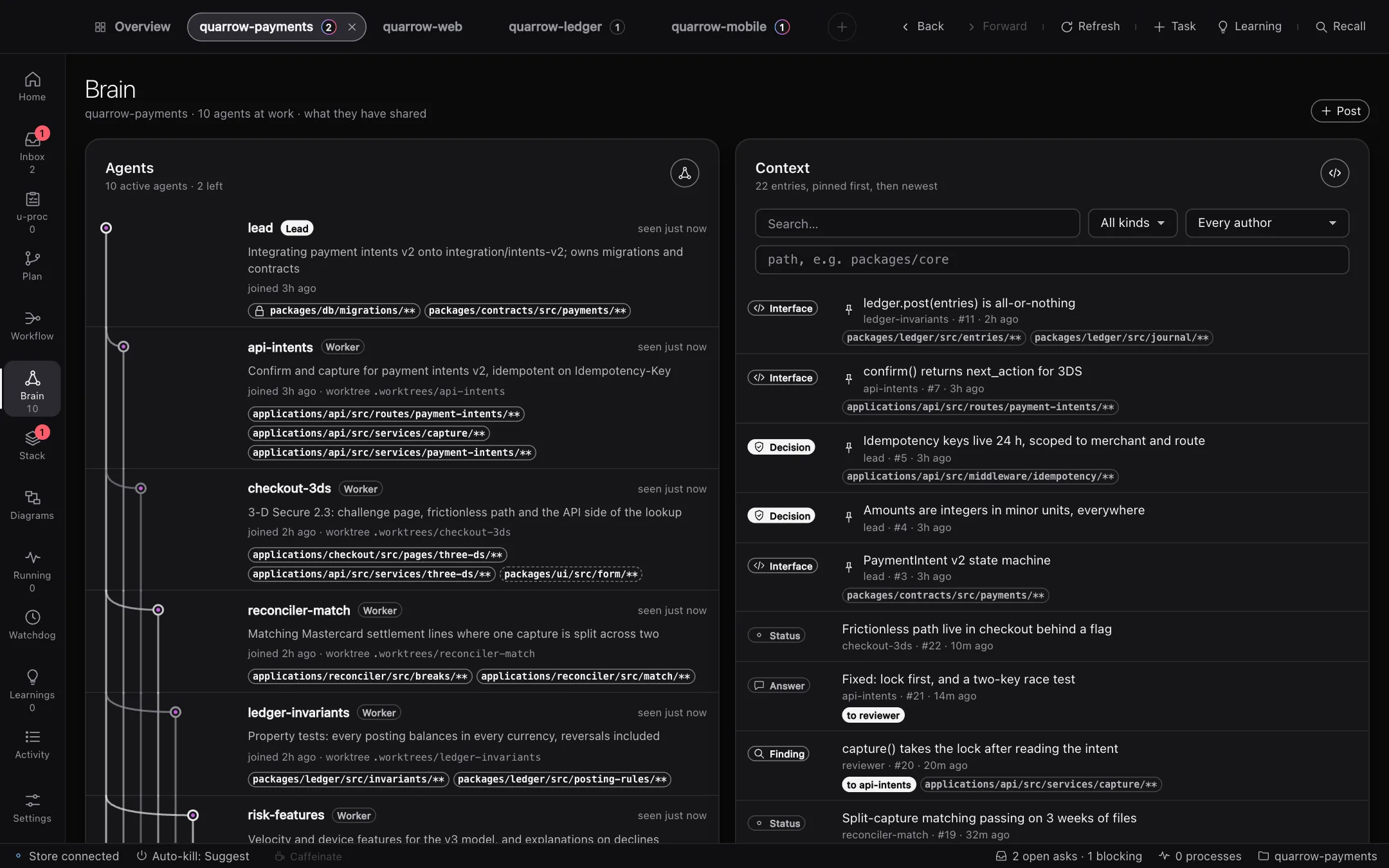
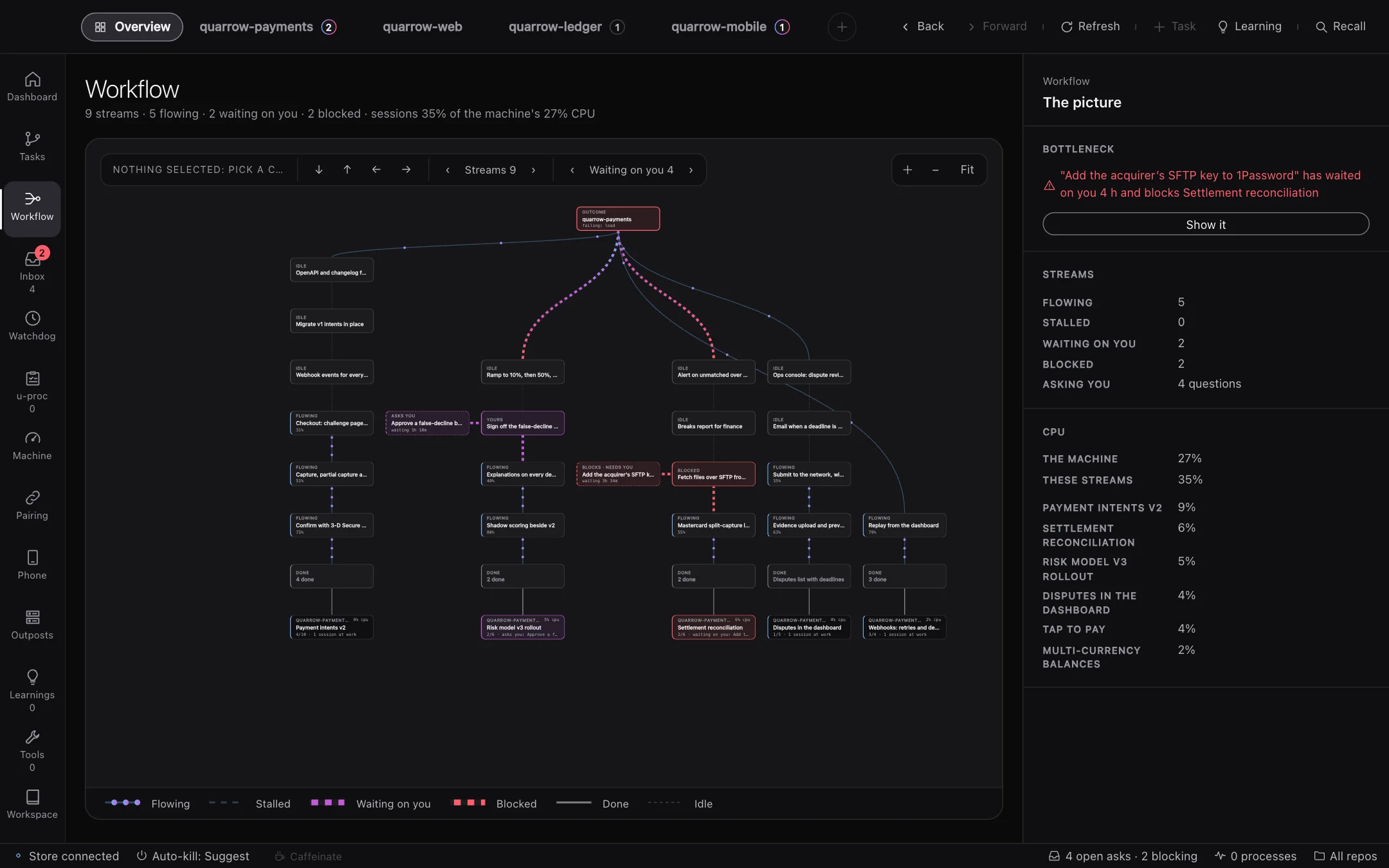
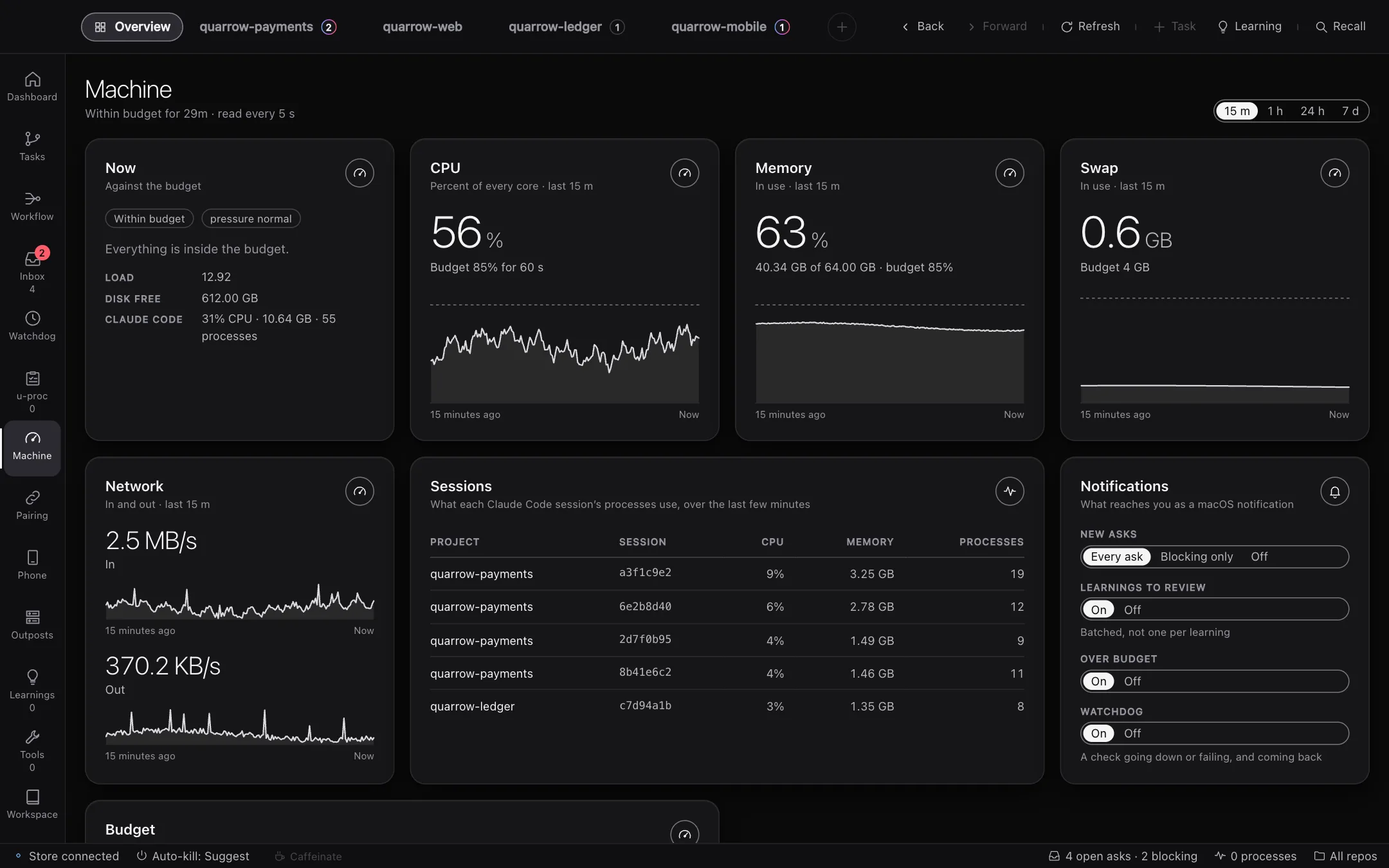
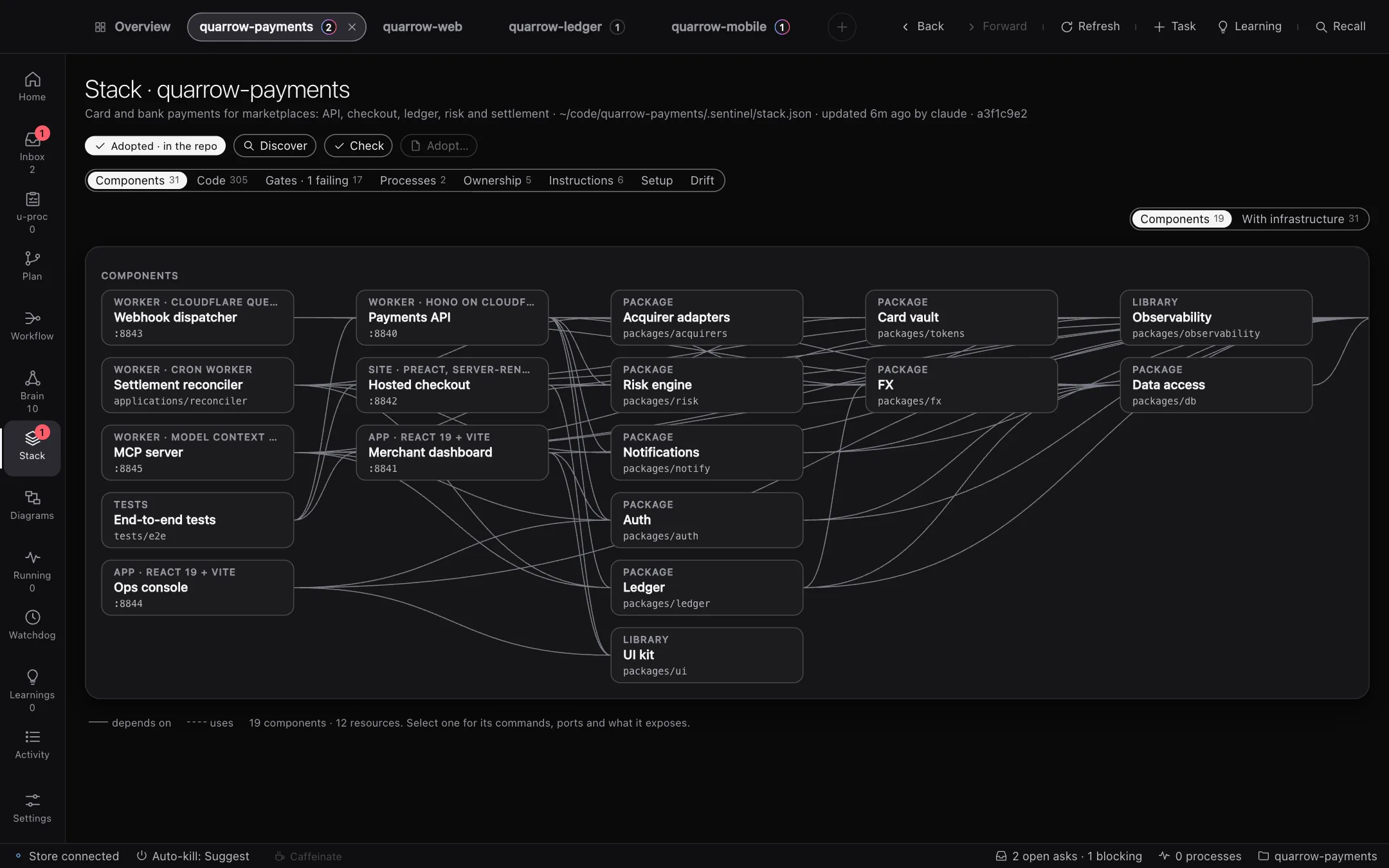
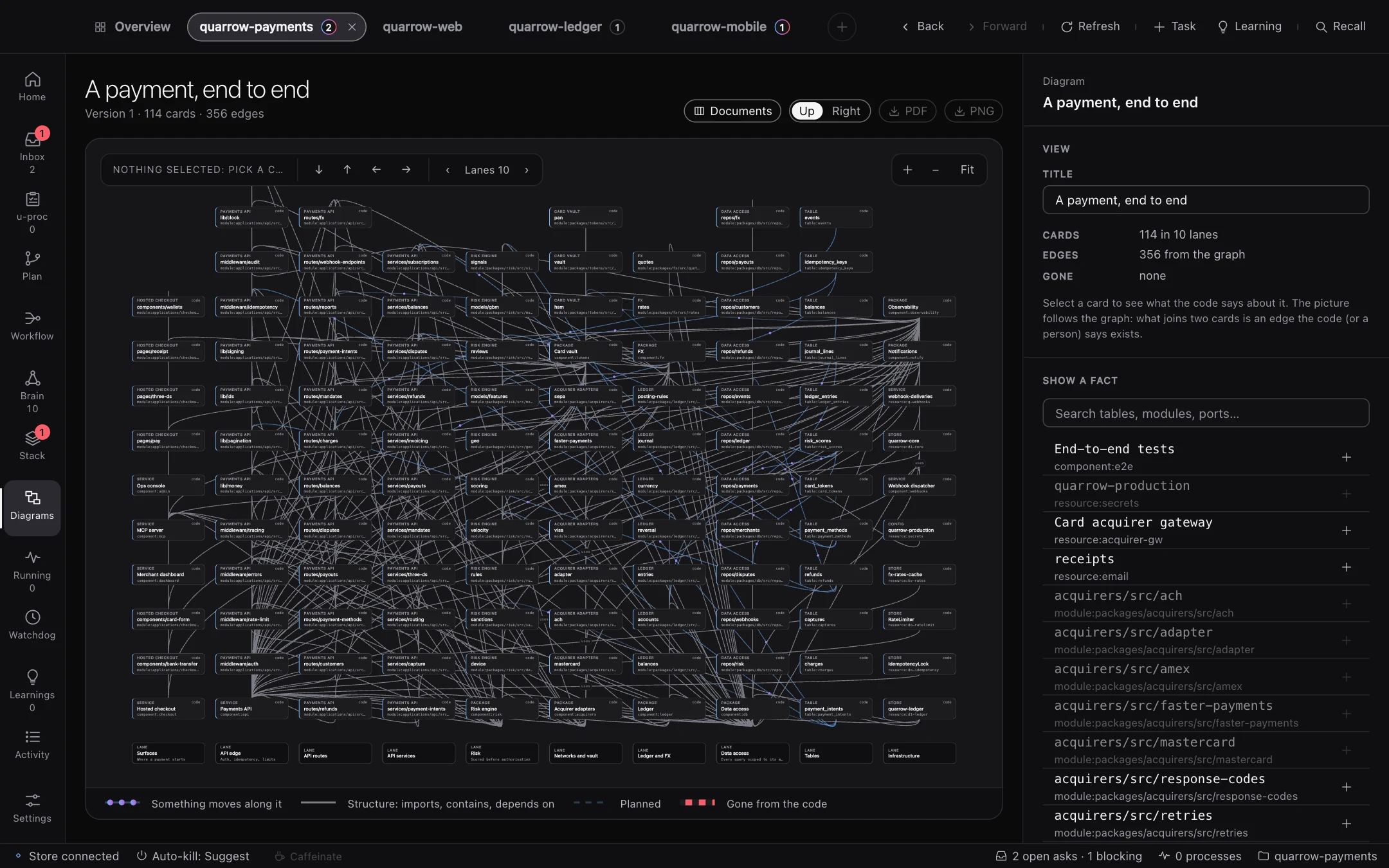
Sentinel runs on our engineers’ own computers, so you won’t sign in to it. Here it is on an invented payments company: the agents at work, the streams of work, the machine they run on, what the repository is made of, and the code graph they all read from.
On an FDE engagement
What you’ll actually see.
Your engineer works in your repositories, your standups and your tools. Sentinel sits beside them on their own computer. Here’s where it shows up for you.
Week one
We write down how your system is built
Its parts, the commands that check them, and the rules for which files, kept in your repository and checked against what’s really there. We agree with you which files are sensitive and which coding agents we’ll use.
Every pull request
The evidence comes with it
What the change touched, which checks ran, and proof that those checks catch faults. Your team still reviews it. They just have a lot more to go on.
Whenever you ask
The decisions, in plain English
What was asked, who answered, and what came of it, rather than buried in a chat history.
At handover
You keep what’s yours
The description of how your system is built, the checks and the tests that prove them, and a record of the significant decisions. They’re yours once you’ve paid, like the code. Sentinel itself stays with us: it’s our IP, and it isn’t part of what you buy.
What it isn’t
- Something you buy. Sentinel is Daedalus IP. We don’t sell it, license it or install it in your systems. Your fees pay for our engineers and the result.
- A second AI. There’s no AI inside Sentinel. It holds the state for the agents we already use, and puts it in front of a person.
- A certificate. It won’t make you SOC 2 or “FCA-approved”, and we’ll never claim it does. It does make it much easier to show your auditor our working.
- The clever bit. Running lots of agents at once, giving them memory, mapping your code: Sentinel does all of that, and it’s useful. But those features are increasingly built into the tools everyone uses, and they aren’t why you should hire us.
Where your information goes
- Nowhere public. Your data stays out of public models. We agree the coding agents with you before they touch your systems.
- Onto one computer. Sentinel runs on your named engineer’s own Mac, in files only their account can read. There’s no account, no server and no sync.
- Nothing is reachable that nobody chose. Apart from a one-off download of a small search model, which sends nothing of yours, Sentinel doesn’t talk to the outside world. Its one listener answers only on the same machine, behind a key.
- Text is never an order. If a ticket, a web page or a file contains something that reads like an instruction, Sentinel shows it to a person and never obeys it.